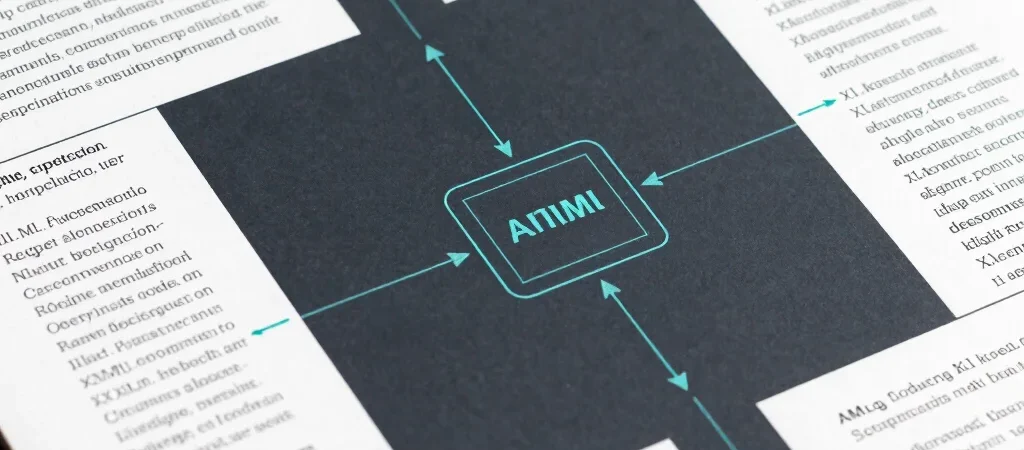
Large language models often struggle when digesting dense, multi-page PDF documents, frequently fabricating statistics or cross-contaminating details across chapters. Traditional single-pass summarization hits context window constraints and dilutes critical information from middle sections. Implementing a structured map-reduce architecture with explicit context boundary markers solves this reliability gap completely.
Isolating Document Chunks with Context Delimiters
The primary cause of retrieval degradation in long documents is unbounded text ingestion. By wrapping input text in explicit XML tags such as document_chunk and enforcing page-level tracking, you force the model to anchor every extracted point to a verified location. This spatial discipline prevents hallucinated cross-references between unrelated sections.
When chunking documents, maintain an overlap of approximately two hundred tokens between adjacent segments. This preserves context across section breaks without overloading the model memory buffer or duplicating key facts.
Enforcing Refusal Directives Through Negative Prompting
Standard summarization prompts encourage models to fill in logical gaps with pre-trained parametric knowledge. Introducing hard negative constraints explicitly forbids speculation and directs the model to output a verified null token whenever information is absent. If the text does not contain the answer, the model must explicitly state that the detail is unmentioned.
Test your system prompt against intentional control traps, such as asking for budget totals from a document that omits financial data. A resilient system prompt consistently triggers the null response instead of hallucinating believable figures.
Synthesizing Output for Repeatable Auditing
The final reduction step combines individual chunk summaries into a structured executive brief. Instruct the model to cite specific page tags alongside every key bullet point. This produces an auditable summary where human operators can instantly verify facts against original PDF source pages.